Why Do Overseas “Sensitive” Platforms Use Country-Specific Separate Domains?
Regional websites make it easier to present different rules and services to users in different markets. However, the legal obligations normally follow the service’s activities and target users rather than the domain name alone.
Content Control and Mandatory Age Verification Requirements
Age-access requirements differ substantially between countries. In the United Kingdom, services within the scope of the Online Safety Act that allow pornography must use highly effective age assurance to prevent children from normally encountering it. Ofcom’s framework is technology-neutral and recognizes age verification, age estimation, or a combination of methods. It does not require every service to use government ID scans or credit card checks specifically.
German rules also restrict open access to pornography. The media authority for North Rhine-Westphalia explains that such material may be made available through closed adult user groups using a process that includes initial identification and authentication during later access. A regional domain can support a country-specific age-assurance flow, explanatory text, complaint procedure, and content catalog. The same changes can also be implemented through a regional section of one global domain.
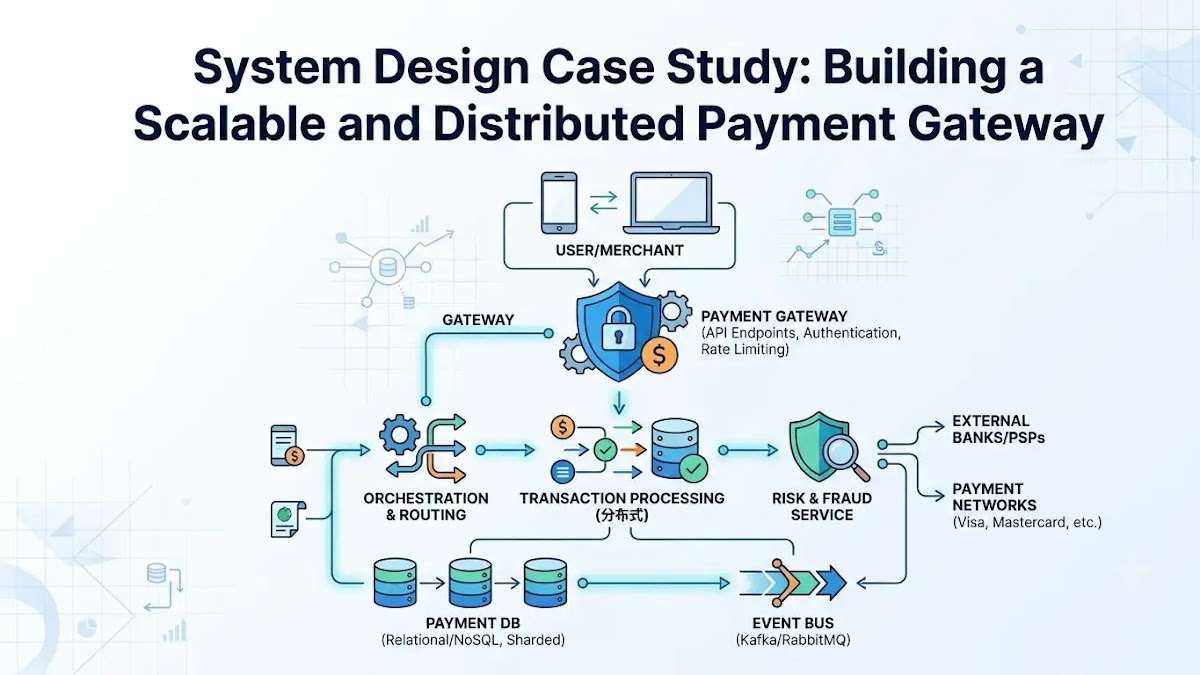
Payment Gateway Localization and Card Authorization Rates
A local website may display prices in local currency and support payment methods familiar to customers in that market. It can also connect users to a regional merchant entity or payment provider.
The domain itself does not increase card authorization rates or eliminate cross-border and foreign-exchange charges. Payment outcomes depend on factors such as the merchant’s acquiring arrangement, billing currency, card issuer, transaction risk, payment category, authentication method, and the customer’s bank.
A service should therefore distinguish between:
A localized website address.
The legal entity accepting payment.
The merchant name appearing on the statement.
The country of the acquiring bank.
The currency in which the transaction is processed.
Separate domains may help explain these differences, but they do not change the payment structure unless the underlying merchant and processing arrangements are also different.
How Do National Laws Regulate Adult Content?
Divergence in Legal Definitions
Countries do not use one international definition of permitted adult content. They may differ on classification, age restrictions, prohibited material, record keeping, advertising, performer documentation, platform liability, and methods used to restrict children’s access.
Because these rules depend on the jurisdiction and type of service, operators may need a different content catalog or access procedure in each country. A domain can make those distinctions clearer to users, but a domain name is not a substitute for reviewing the applicable law.
Preventing System-Wide Government Blocks (Blast Radius Isolation)
A regulator or network provider may restrict access to a particular hostname, domain, IP address, application, or service. Using a separate regional domain can sometimes limit the immediate effect of a hostname-specific block.
It does not guarantee that enforcement will remain confined to one domain. Authorities may act against related domains, payment channels, application listings, service providers, or the company operating them. If regional domains use the same origin servers, DNS provider, CDN account, or authentication system, an infrastructure failure can still affect every market.
The Domain Isolation Solution: Domain separation can reduce operational coupling only when it is supported by separate configurations, access controls, deployment procedures, monitoring, and recovery plans. Registering several domains while routing all of them through the same unsegmented system provides limited isolation.
Sensitive Data Pitfalls: The European GDPR Fear of Exposing User Sexual Preferences
The Threat of Behavioral Data Harvesting
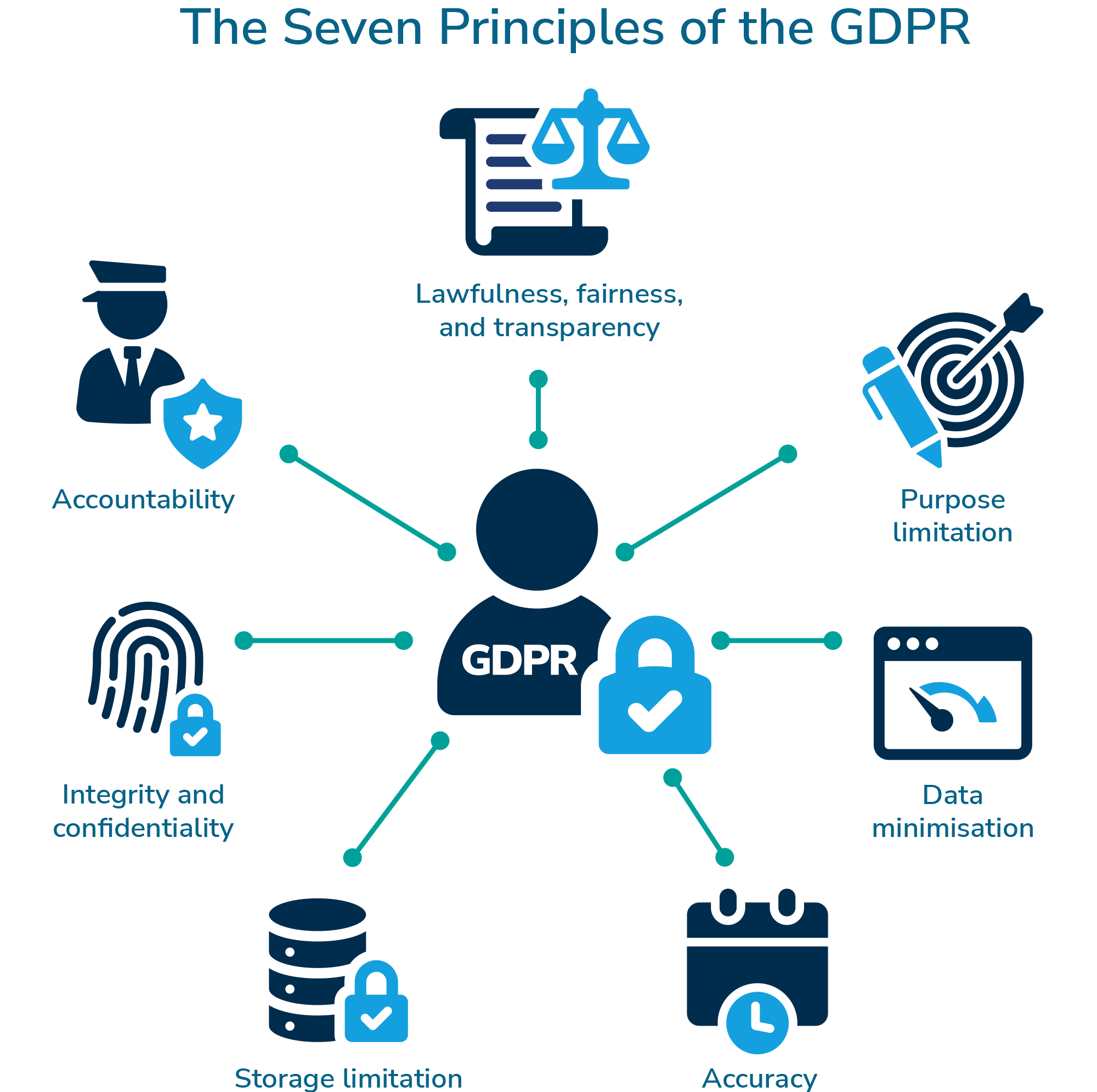
The GDPR lists data concerning a person’s sex life or sexual orientation as special-category personal data. Browsing a particular adult page does not automatically establish a person’s orientation or sex life in every situation. The classification depends on whether the data reveals or is used to infer information covered by Article 9.
Even when Article 9 does not apply, IP addresses, account identifiers, viewing records, payment details, device data, and tracking identifiers can still be personal data subject to the GDPR.
The maximum GDPR fine for certain infringements may reach €20 million or 4% of the undertaking’s total worldwide annual turnover from the preceding financial year, whichever is higher. This is a statutory maximum, not an automatic penalty for every incident.
Compliance Burdens Driven by Minor Technical Features
Third-Party Script Integration: Using analytics, CAPTCHA, advertising, fraud-prevention, or video-hosting technology is not automatically a GDPR violation. Operators must determine what data is collected, establish an appropriate legal basis, provide required information, configure retention, control third-party access, and address international transfers where applicable.
Age assurance also requires careful data minimization. The European Data Protection Board states that it should not create unnecessary ways to identify, locate, profile, or track users. In many cases, the service may need to know only whether a person is over the required age rather than collecting the person’s identity or exact date of birth.
Data Subject Rights: The GDPR provides a right to request erasure, but it is not an unconditional requirement to delete every record immediately. Data may sometimes be retained when processing is needed to comply with a legal obligation, establish or defend legal claims, or meet another applicable exception.
Domain Separation to Mitigate or Isolate Compliance Costs
Deploy an Independent European Domain: A separate European website can make it easier to apply regional privacy notices, consent settings, retention schedules, age-assurance providers, and user-rights procedures. EU-based hosting is not automatically required by the GDPR. If data is transferred outside the European Economic Area, the operator must use an applicable transfer mechanism and safeguards.
Complete Geo-Blocking from the Main Domain: Blocking European IP addresses does not automatically eliminate all GDPR exposure. The GDPR’s territorial scope can extend to non-EU organizations that offer goods or services to people in the Union or monitor their behavior there. Whether a blocked service remains within scope depends on its actual activities and targeting, not only its server or domain location.
Blocking Foreign Traffic to Reduce Cyber Attack Risks
Shrinking the Attack Surface
A regional service may restrict traffic from locations where it has no customers. Geo-blocking can reduce irrelevant requests, automated scanning, and log volume.
It should not be described as a reliable way to identify attackers. IP-based locations can be inaccurate, and malicious traffic may pass through VPNs, proxies, cloud platforms, domestic compromised devices, or botnets. Legitimate customers may also travel or use corporate networks that appear to be in another country.
The Australian Signals Directorate advises that geo-blocking may provide an additional access-control layer but should be used only as part of a broader defense-in-depth strategy.
Country-code domains also do not automatically restrict visitors to the associated country. ICANN defines a ccTLD as a top-level domain associated with a country, territory, or geographical location, while registration and usage policies vary among registries. Access restrictions must be configured separately.
DDoS Attack Mitigation
Distributing services across regions can improve resilience when each region has suitable CDN protection, capacity planning, traffic filtering, rate limiting, monitoring, and failover. Separate domain names alone do not absorb a DDoS attack. If every domain depends on the same network, origin servers, DNS provider, database, or CDN account, an attack or service failure can still create a global outage.
Effective isolation requires operators to identify shared dependencies and decide which components should be separated. It may be more practical to retain one domain while using resilient CDN and application infrastructure than to operate several poorly maintained regional domains.

Separate country domains can help adult content services present regional age controls, payment information, privacy notices, support channels, language, and content availability. They may also reduce the operational effect of some local changes when the supporting systems are genuinely separated. They are not an essential architectural requirement and do not create automatic legal, privacy, payment, or cybersecurity compliance.
A single domain may be sufficient when regional rules can be implemented reliably through configuration and location-aware access controls. Multiple domains may be appropriate when markets require substantially different products, legal entities, payment structures, or operational teams. Actionable Advice for Operators: Define the legal and operational reason for every regional domain before creating it. Document the intended users, applicable age-access rules, payment entity, data flows, regional content policy, security dependencies, and maintenance owner. Obtain advice from qualified counsel in each market rather than assuming that domain separation alone contains regulatory risk.